Roofing in Nutley, NJ -- plus the eight things worth checking on any finished roof, ours included, while the final payment is still in your hand.
$12,000 to $18,000 on a typical 2,000 square foot house, $9,500 to $26,000 across the range. The thing worth knowing beyond the price is how to tell afterwards whether you got it: straight courses, no nail heads on the face, a starter course at the eaves and rakes, and proper ridge cap rather than three-tab cut into squares.
An architectural asphalt roof in New Jersey runs $9,500 to $26,000, and most 2,000 square foot houses land at $12,000 to $18,000 installed. Architectural shingle is $5.50 to $8.00 per square foot against $4.50 to $6.50 for three-tab, and on a house you intend to keep the heavier product is worth the difference.

REQUEST A QUOTE
Complete the form and describe the work you need help with.


New Jersey figures for an architectural asphalt roof, with most 2,000 square foot houses landing at $12,000 to $18,000 installed. Architectural shingle is $5.50 to $8.00 per square foot against $4.50 to $6.50 for three-tab -- a few thousand dollars on an average roof, and the clearest case in this trade of a cheaper quote being a lesser roof. One township and one construction office, so unlike most of this county the paperwork does not move the number -- the housing does. What changes between Nutley's sections is the age of the stock, whether the roof space is lived in, and how many trees are over it.
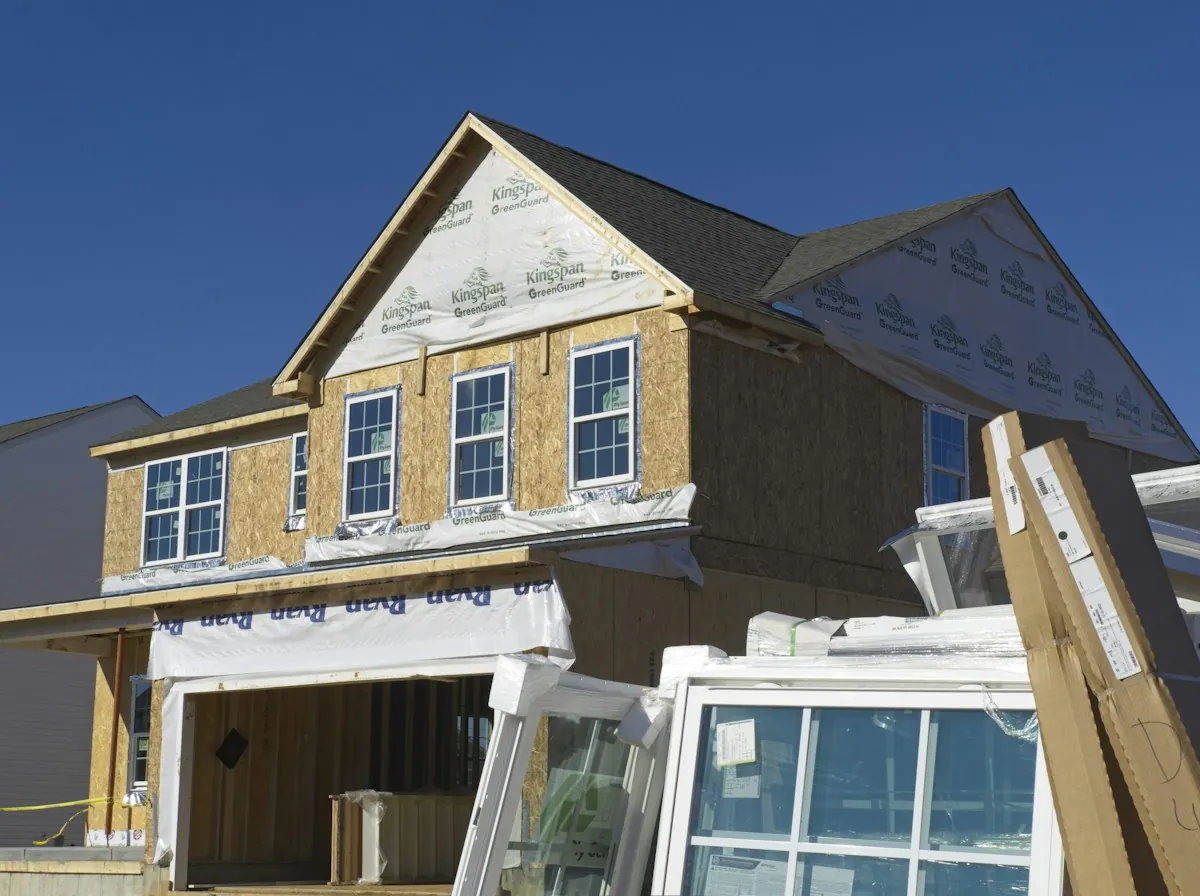
A simple roof shape, a driveway to work from, one existing layer to come off, and a deck that turns out sound. Much of this township qualifies.
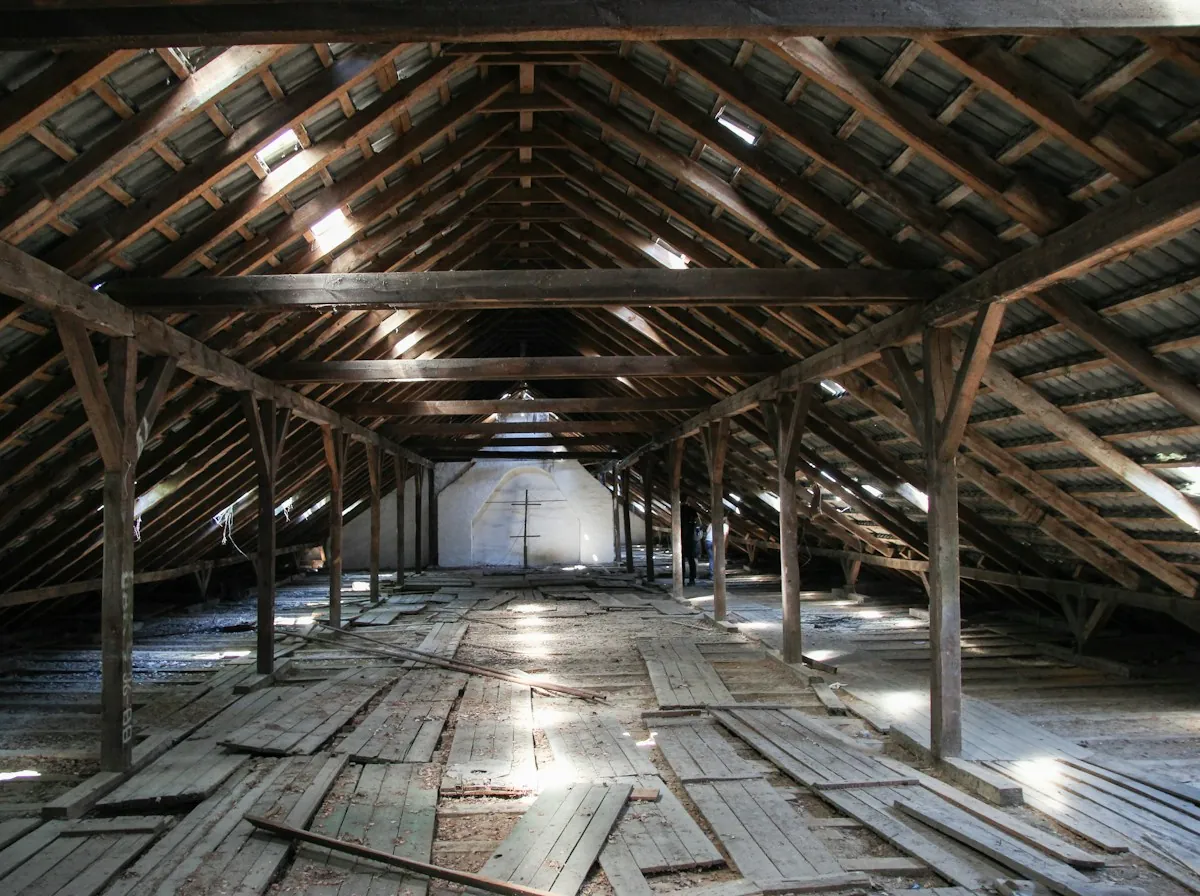
Board sheathing that has to be made good rather than nailed into, a second covering to strip, rooms in the roof that complicate the eaves, and roof shapes with more valleys per square foot than modern work has.
How decking replacement is priced. It belongs in the scope as a rate per sheet, because nobody knows how much has softened until the covering is off, and a lump figure is a guess in one direction or the other.
The neighboring jobs, priced.
Most repairs land between $350 and $1,800, from about $150 for something minor.
Water through a ceiling tonight gets covered tonight; the five-figure decision waits until morning.
$5 to $14 a square foot, EPDM $5 to $9 and TPO $6 to $12.
More recurring leaks start at a chimney than anywhere else on a pitched roof, and it is also the classic corner cut: old flashing reused with a bead of caulk round it.
Two visits go by this name.
Nearly all of it is visible from the ground or an upstairs window, and the time to look is before the final payment.
Shingle lines that wander, or exposure that changes from one course to the next, mean nobody snapped a chalk line. And any nail head visible on the exposed part of a tab is a hole in your roof with a small metal plug in it. Both are countable rather than arguable.
There should be a starter strip under the first course at the eaves AND up the rakes; where there is not, the first course sits proud with daylight under its cut edge. At the top, an architectural roof should have proper cap shingles -- three-tab cut into squares is thinner and cheaper.
Valleys want metal underneath rather than a bead of sealant doing the work. Fresh caulk on weathered metal at a chimney means the flashing was reused rather than replaced. And run a hand along the eaves behind the gutter: a missing drip edge is common, cheap to leave out and completely hidden.
Nails in the drive and the borders, debris in the gutters, ruts on the lawn. A crew that did not care about what you can see did not care more about what you cannot. Do this walk BEFORE the final payment -- afterwards it is a complaint, beforehand it is a snag list and most roofers will simply fix it.
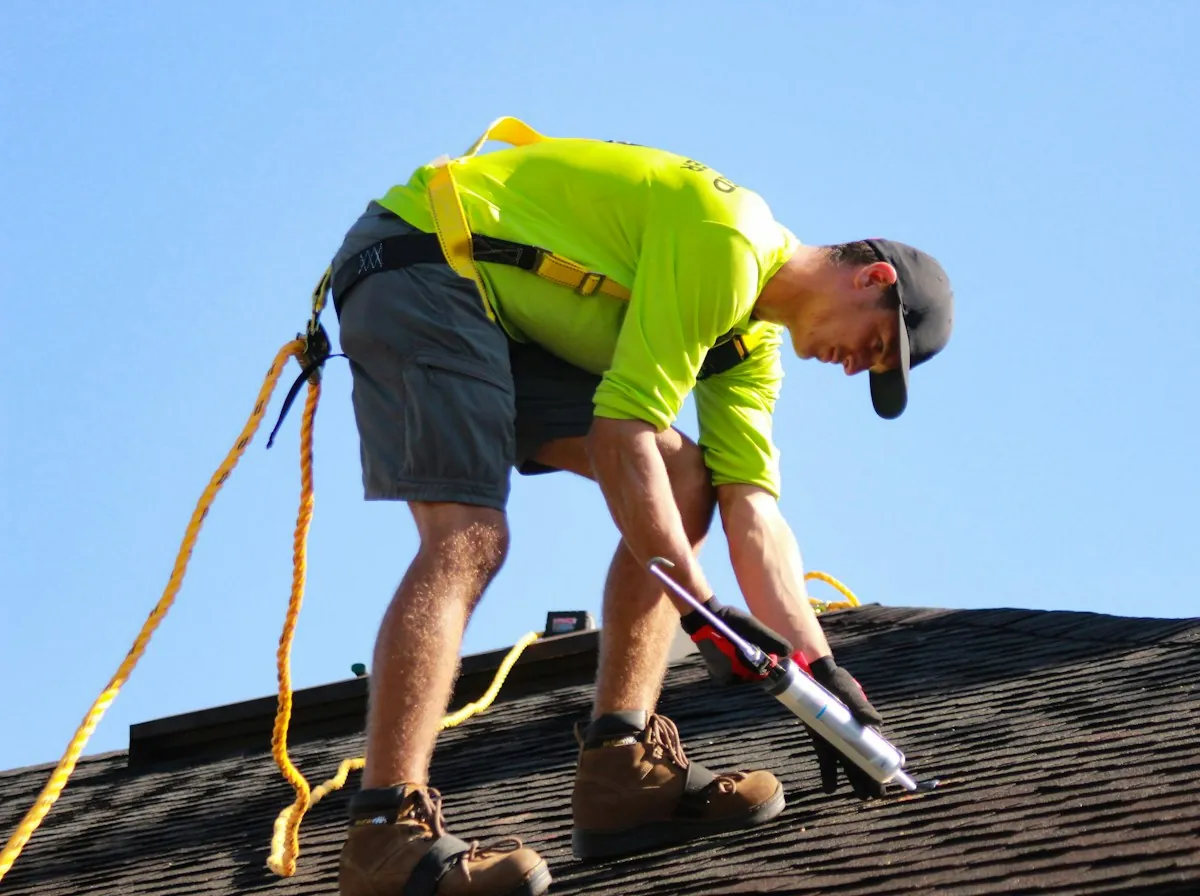
Free inspection, a written scope, and a walkaround before the final payment.
Tell us the address and what prompted the call. If this is about work somebody else has just finished, say so -- that is a different visit with a different output, and it is one worth booking before you settle the invoice.
Both together. Outside: the slope and the details that actually fail. Inside: the layer count, the deck type, old water tracks and daylight. On Nutley's older stock the roof space usually settles whether the deck is board sheathing or plywood.
The work described in plain language, decking as a rate per sheet, and the details named rather than implied -- starter course, ridge cap, valley metal, drip edge. If they are written down, they are checkable afterwards.
We go round the outside with you against that same list before the balance is mentioned. Anything on it that is not right gets put right first. You keep the photographs whatever you decide to do next.
The last one is the only one on this list that costs the contractor anything to agree to.
Starter course, ridge cap, valley metal, drip edge, ice barrier. If they are written down they are checkable afterwards; if the quote says only 'strip and re-roof', there is nothing to hold it to.
Nobody knows how much deck has softened until the covering is off. A rate per sheet is honest; a lump sum is a guess that gets revisited upwards once the roof is open.
New Jersey registers home improvement contractors and the number belongs on the paperwork, not just a website footer. Its absence tells you something before you have read a price.
Tear-off and disposal is a real cost and a real nuisance. A quote that does not mention it either has not included it or intends to overlay, and overlaying is a decision you should be making rather than discovering.
This is the one that separates people. The work is finished, the balance is not paid, and somebody goes round the outside with you against a list. A contractor who is happy to do that is telling you what they expect you to find.
Search roofing in Nutley and a striking share of what people are asking is how to judge the work: what the signs of a bad roofing job are, what a finished roof should look like from the ground, and what to check before the last payment. Most answers to that talk about vetting the firm before you hire. Useful, but it does not help the person whose roof is already finished and who has a nagging feeling about it.
So here is the other half. Are the shingle courses straight and is the exposure the same from one course to the next -- if not, nobody snapped a chalk line. Can you see nail heads on the exposed face of any tab, because every one of those is a hole with a metal plug in it. Is there a starter course under the first row at the eaves and up the rakes. Is the ridge proper cap shingle, or three-tab cut into squares. Do the valleys have metal under them or is a bead of sealant doing the work. Is there fresh caulk on old flashing at the chimney, which means it was reused rather than replaced. Is there a drip edge behind the gutter at all. And how was the site left -- nails in the borders and debris in the gutters tell you what the crew thought of the parts you cannot see.
Nearly all of that is visible from the ground or an upstairs window. The important part is WHEN you look: before the final payment, not after. Afterwards it is a complaint and you are asking a favor. Beforehand it is a snag list, and most decent roofers will simply put it right, because they would rather fix a ridge than argue about an invoice. Apply it to us as readily as to anybody else -- we will do the walkaround with you and ask for the balance afterwards.

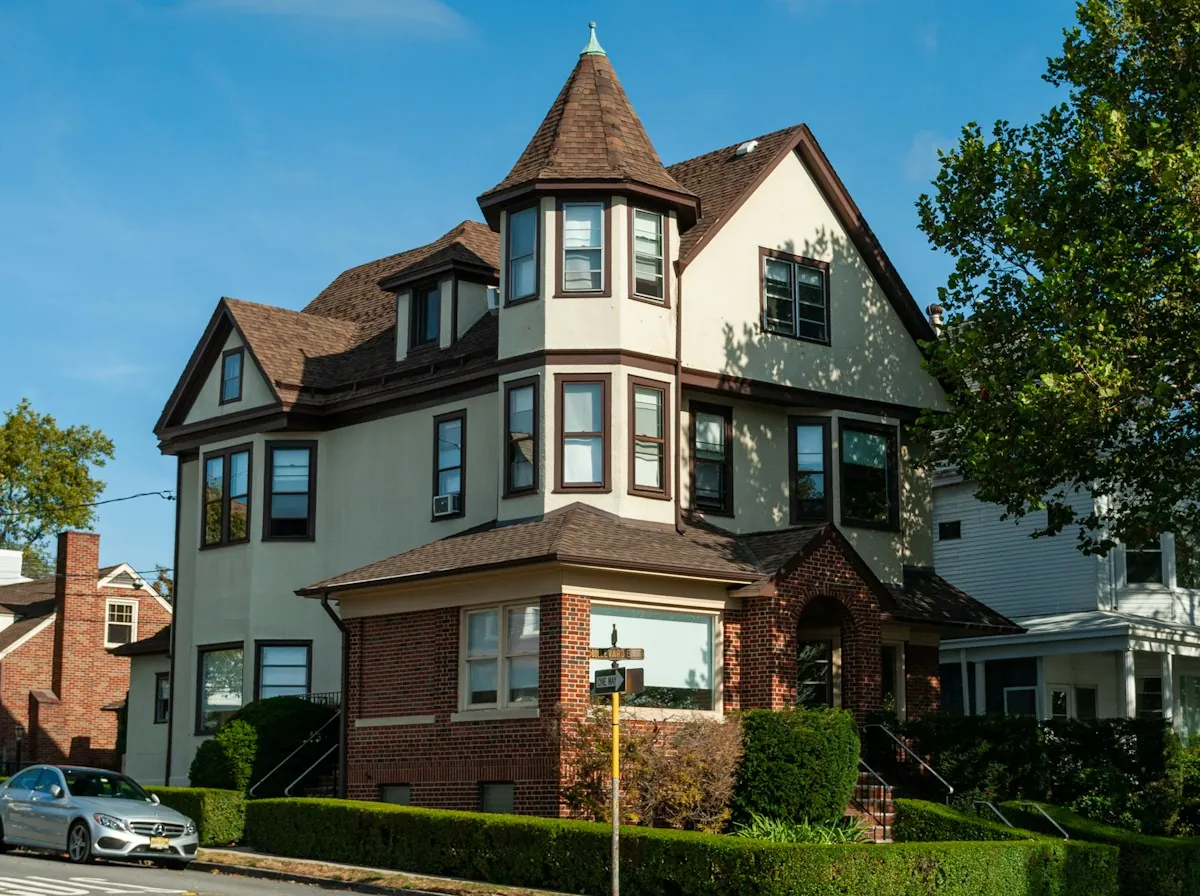
A small Essex County township of about three and a half square miles on the Third River, built out largely between the wars and in the two decades after. Dense and consistent: colonials, Tudors, capes and a good deal of two-family housing on compact lots, with detached garages and mature street trees.
One township and one construction office, which is unusual in this county -- what changes between Nutley's sections is the housing rather than the paperwork. Most of it is detached or two-family, so a covering replacement is usually ordinary maintenance with no permit at all.
Small enough that a crew working one street is working the next one within the month, which is worth knowing both ways.

Nutley section by section. One township, one construction office, and housing that changes street by street rather than at a boundary.
Plain roofs, where sloppy work shows up fastest.
Heavy canopy. Valleys, gutters and shaded slopes.
Capes with rooms in the roof. Ventilation first.
Mixed use and multi-family. Unit count decides it.
The oldest stock. Board decking and second layers.
The avenue: parapets, drainage, tenants below.
The questions that decide this job, answered before you have to ask them.
Only where it has actually softened, and as a rate per sheet in the written scope rather than a lump guess. On the older stock here the deck is frequently board sheathing rather than plywood, which holds a nail differently, so it is established by lifting and looking before anything is specified on top of it.
Only over one existing layer, on a sound deck. Two coverings is the practical ceiling, and an overlay buries the eaves detail -- so if there was never an ice barrier down there, an overlay guarantees there still is not. In this climate that is the wrong saving.
Eight of them are visible without climbing anything. Shingle courses that wander, or exposure that changes from row to row -- nobody snapped a chalk line. Nail heads showing on the exposed face of a tab, each of which is a hole with a metal plug in it. No starter course under the first row at the eaves or up the rakes. Ridge cap made from three-tab cut into squares on an architectural roof. Valleys with sealant instead of metal. Fresh caulk on old flashing at the chimney, meaning it was reused. No drip edge behind the gutter. And nails and debris left in the garden. Look for all eight before the final payment, not after.
Look at the paperwork rather than the pitch. In New Jersey a home improvement contract over $500 must be in writing and signed, must carry the contractor's legal name and business address, and must give you three business days to cancel -- so a price described as good only for today is not something the law holds you to. Add two practical tests: a deposit that is a large share of the total before any material arrives, and a quote that names no specific materials. A scope that says only 'strip and re-roof' cannot be held to anything.
An architectural asphalt roof runs $9,500 to $26,000 in New Jersey, and most 2,000 square foot houses land at $12,000 to $18,000 installed. Per square foot that is $5.50 to $8.00 for architectural against $4.50 to $6.50 for three-tab. If a quote is well under those figures, the question is not whether it is a bargain -- it is which of the tear-off, the ice barrier, the starter course, the drip edge or the decking allowance is missing from it.
Free inspection, a written scope, and a walkaround with you before the final payment is ever mentioned.