Flat Roofing in Spring Garden from $5. $5 to $14 a square foot, and the junction is where these actually fail. Free inspection and a written quote.
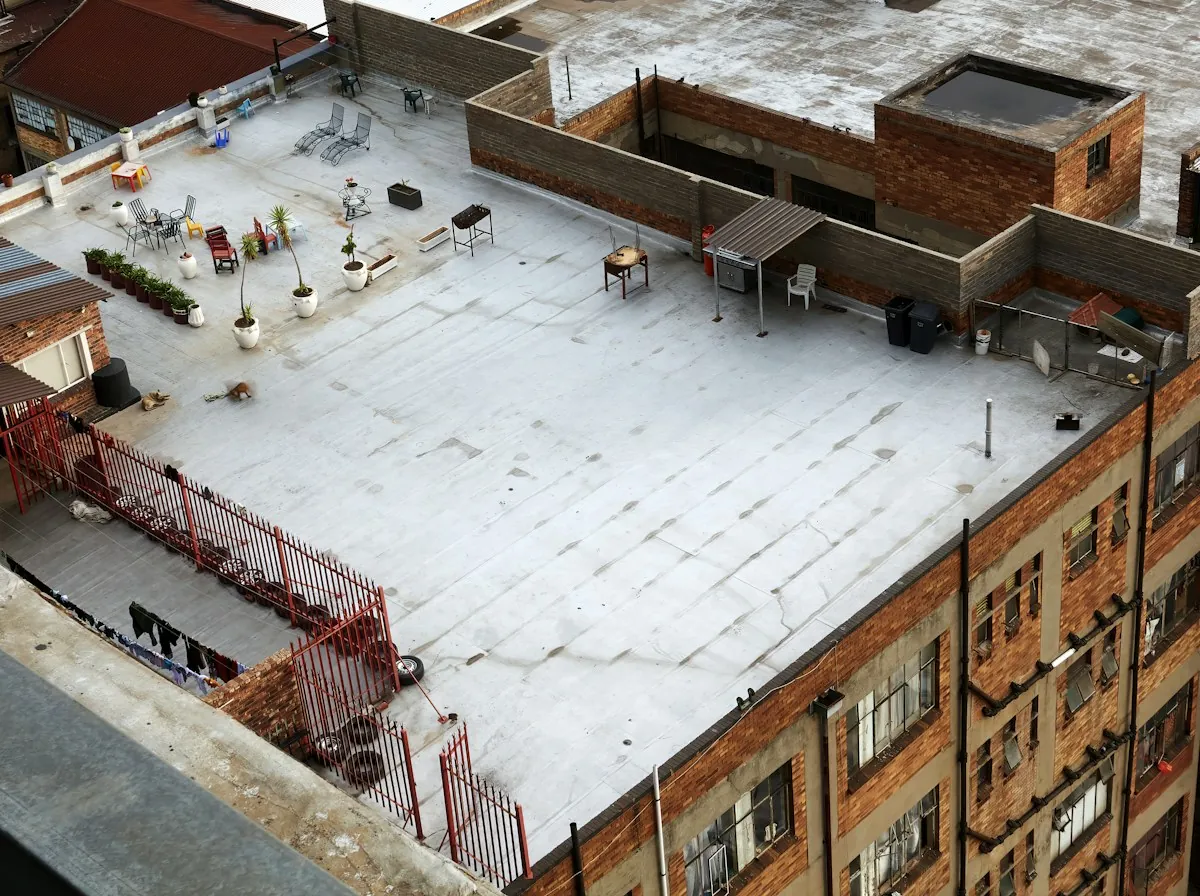
The typical flat roof in this section is a rear extension or an attached garage on an otherwise conventional house, and the typical failure is where it meets the original building. Upstand height and a fall that actually runs matter more than which membrane goes on.
Flat roofing installs at $5 to $14 per square foot: EPDM at $5 to $9 and TPO at $6 to $12 across normal residential work. Very little of the low-slope roofing in Nutley is a whole building -- it is rear extensions, porch roofs, dormer tops and garages, sitting beside a pitched roof and usually draining onto it.


Flat roofing installs at $5 to $14 per square foot: EPDM at $5 to $9 and TPO at $6 to $12. Almost all of it here is an extension, porch, dormer top or garage beside a pitched roof, which is why the junction is the job. The most predictable pricing on this site. Plain roofs with little geometry mean the two variables are visible: the layer count, and whether the quote is architectural shingle at $5.50 to $8.00 or three-tab at $4.50 to $6.50 for a similar-looking total.
A simple rectangle with a real fall on it, at accessible height, draining somewhere sensible. Most post-war extensions qualify and the work is quick.
Junctions and parapets. Where a low-slope roof meets a wall or a pitched slope the detail is the job, and behind a street parapet the coping and the internal outlets are as well.
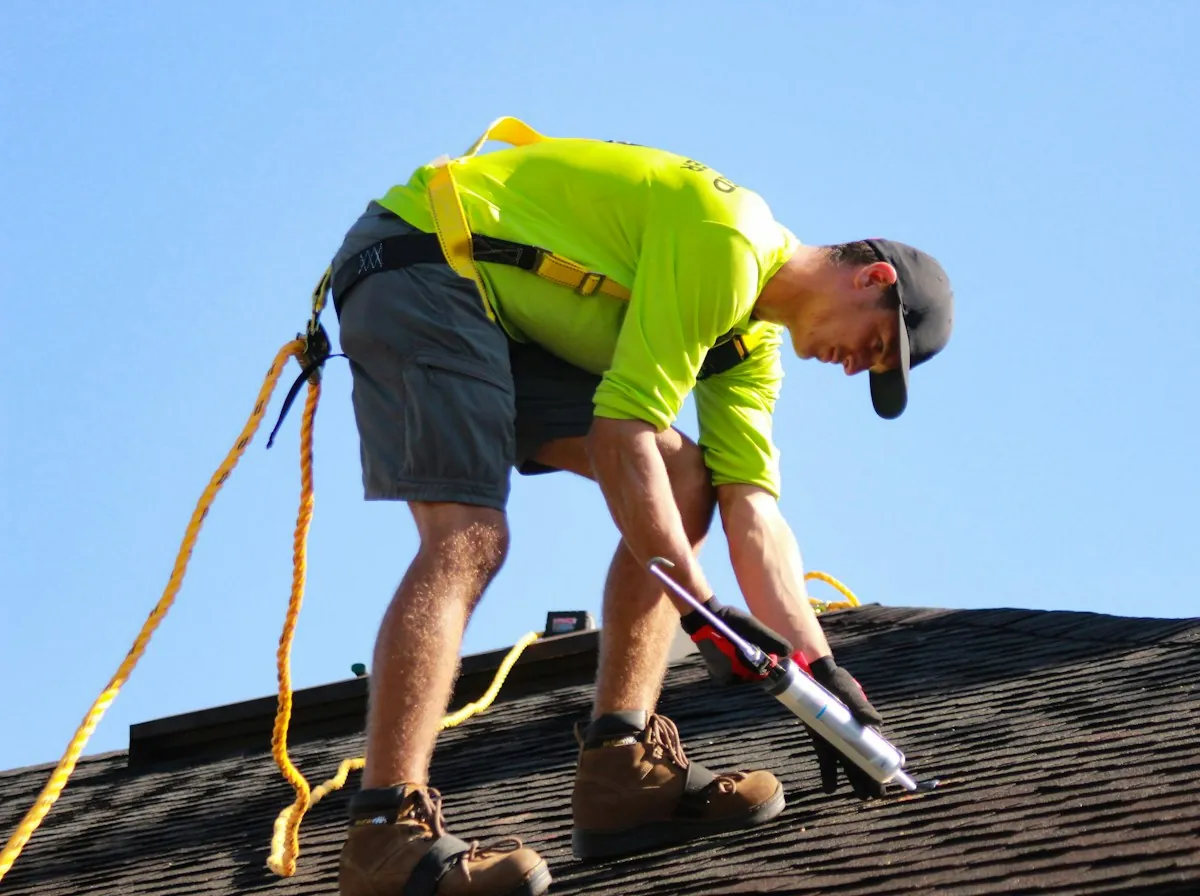
A membrane taken up a wall and finished with a bead of sealant. An upstand has to be dressed and mechanically terminated; sealant is a finish, not a fixing.
Simple roofs are where bad workmanship is easiest to spot, because there is nothing else going on to distract the eye. A wandering course or an inconsistent exposure on a plain gable is visible from the opposite sidewalk.
On a straightforward roof the price difference between quotes is almost entirely product grade and layer count, and both are askable.
The last one is the only one on this list that costs the contractor anything to agree to.
Starter course, ridge cap, valley metal, drip edge, ice barrier. If they are written down they are checkable afterwards; if the quote says only 'strip and re-roof', there is nothing to hold it to.
Tear-off and disposal is a real cost and a real nuisance. A quote that does not mention it either has not included it or intends to overlay, and overlaying is a decision you should be making rather than discovering.
This is the one that separates people. The work is finished, the balance is not paid, and somebody goes round the outside with you against a list. A contractor who is happy to do that is telling you what they expect you to find.
Plain gables and moderate pitches, which makes this the easiest place in Nutley to see whether a job was done carefully.
Simple roofs fail simply, which is good news: a lifted course, a split pipe boot, a nail line backing out.
On a simple accessible roof an emergency is usually quick to cover and quick to diagnose properly the next morning.
Straightforward houses with single stacks, where the four flashing details are all easy to see and easy to do properly.
On a plain roof a snag inspection is quick and close to indisputable, because everything is visible and there is no geometry to argue about.
One township, one office. The walkaround is the point.
Heavy canopy. Valleys, gutters and shaded slopes.
Capes with rooms in the roof. Ventilation first.
Mixed use and multi-family. Unit count decides it.
The oldest stock. Board decking and second layers.
The avenue: parapets, drainage, tenants below.
The questions that come up, before you have to ask.
Not in itself. Water that clears within a day or two of rain is normal. Water still there a week later is a seam being tested continuously, and it usually means the fall does not actually run or an outlet is not at the low point.
A membrane taken up a wall and finished with a bead of sealant rather than dressed and mechanically terminated. Also seams that run downhill rather than across the fall, and an outlet that is not at the lowest point of the roof -- all visible from a window above.
Look at the paperwork rather than the pitch. In New Jersey a home improvement contract over $500 must be in writing and signed, must carry the contractor's legal name and business address, and must give you three business days to cancel -- so a price described as good only for today is not something the law holds you to. Add two practical tests: a deposit that is a large share of the total before any material arrives, and a quote that names no specific materials. A scope that says only 'strip and re-roof' cannot be held to anything.
Questions with checkable answers. How many nails per shingle and where -- a real roofer answers immediately and quotes the manufacturer's pattern. Is a starter course included at the rakes as well as the eaves. Is the ridge proper cap shingle or cut three-tab. Is the decking priced per sheet or as a lump. Is there a registration number on the document. Vague answers to specific questions are the signal; and afterwards, the roof itself either shows those things or it does not, which is why the walkaround matters more than any conversation beforehand.
For a standard asphalt roof on an average house here, yes -- that is well above the $12,000 to $18,000 most 2,000 square foot houses cost. It is not unreasonable for a large or steeply pitched house, a roof with a lot of valleys and dormers, or slate. The number alone does not answer the question; what the quote itemizes does. If it does not break out area, tear-off, decking and the details, no figure can be judged either way.
The details named in the scope, so they are checkable afterwards. A walkaround with you before the balance is mentioned.