Chimney Flashing Repair in Radcliffe from $350. The commonest source of a leak -- and the commonest place to find last contractor's caulk. Free inspection and a written quote.
In a cape the chimney usually passes through finished space, so a flashing leak shows as damp on an upstairs wall rather than as a stain on an attic rafter. That makes it easy to mistake for condensation or a wall problem, and worth ruling in properly.
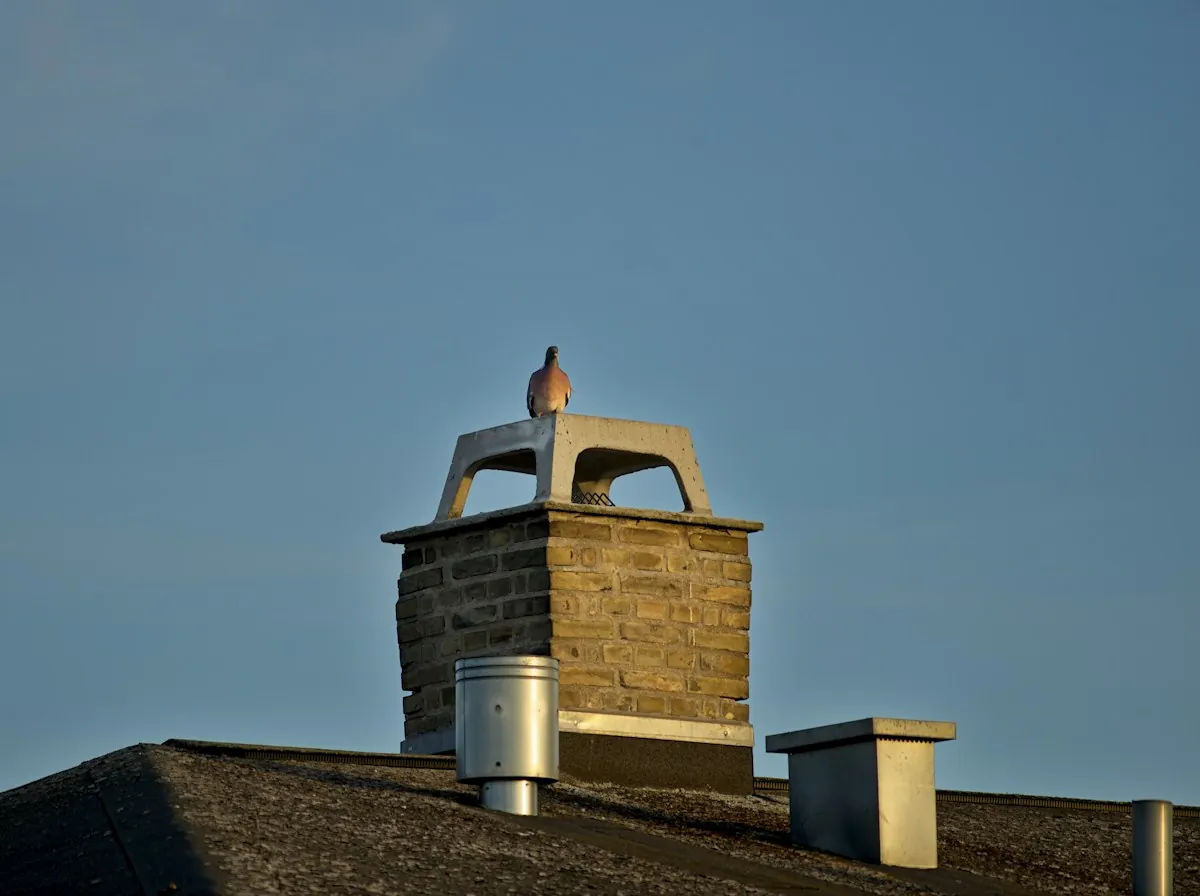
More recurring leaks start at a chimney than at any other single point on a pitched roof. Step flashing up the sides, the apron at the front, the saddle behind and the counter-flashing let into the mortar are four separate details, and any one of them failing puts water into the roof space.


Flashing repairs at a chimney run $350 to $1,600 in most cases, and this is the commonest single source of a recurring leak on a pitched roof. It is also the classic corner cut, because reusing old metal and caulking round it looks fine from the ground for about a year. Rooms in the roof change the arithmetic. Ventilation and the eaves detail take more work on a cape than on the same covering over an open attic, and the parts of the roof space that cannot be inspected have to be priced as unknowns rather than assumed sound.
A single failed detail on sound brickwork -- usually counter-flashing pulling out of a joint, or an apron lifted at one corner.
Mortar. Counter-flashing has to bed into a sound joint, so eroded joints get raked and made good first, and on the oldest stacks in this township there is a great deal more of that than on a post-war one.
Fresh caulk on weathered metal. That means the flashing was reused rather than replaced, and it was almost certainly priced as a replacement.
Converted roof space is the thing to establish here before anything else. Rooms in the roof change the ventilation picture completely, make the eaves detail harder to get right, and are the commonest reason an otherwise sound roof damms at the edges in winter.
If there are rooms up there, the roof is not just a covering -- it is part of the heated building, and it behaves differently.
The last one is the only one on this list that costs the contractor anything to agree to.
Nobody knows how much deck has softened until the covering is off. A rate per sheet is honest; a lump sum is a guess that gets revisited upwards once the roof is open.
Tear-off and disposal is a real cost and a real nuisance. A quote that does not mention it either has not included it or intends to overlay, and overlaying is a decision you should be making rather than discovering.
This is the one that separates people. The work is finished, the balance is not paid, and somebody goes round the outside with you against a list. A contractor who is happy to do that is telling you what they expect you to find.
Capes and expanded capes mean rooms in the roof, and that changes everything about a replacement.
Where there are rooms in the roof, a leak is harder to trace and more expensive to ignore, because there is a finished ceiling between you and the evidence.
In a cape with finished rooms upstairs, an active leak reaches plaster and insulation quickly and there is no attic to catch it.
Shed dormers on capes create low-slope areas immediately above living space, which is the least forgiving place to have one.
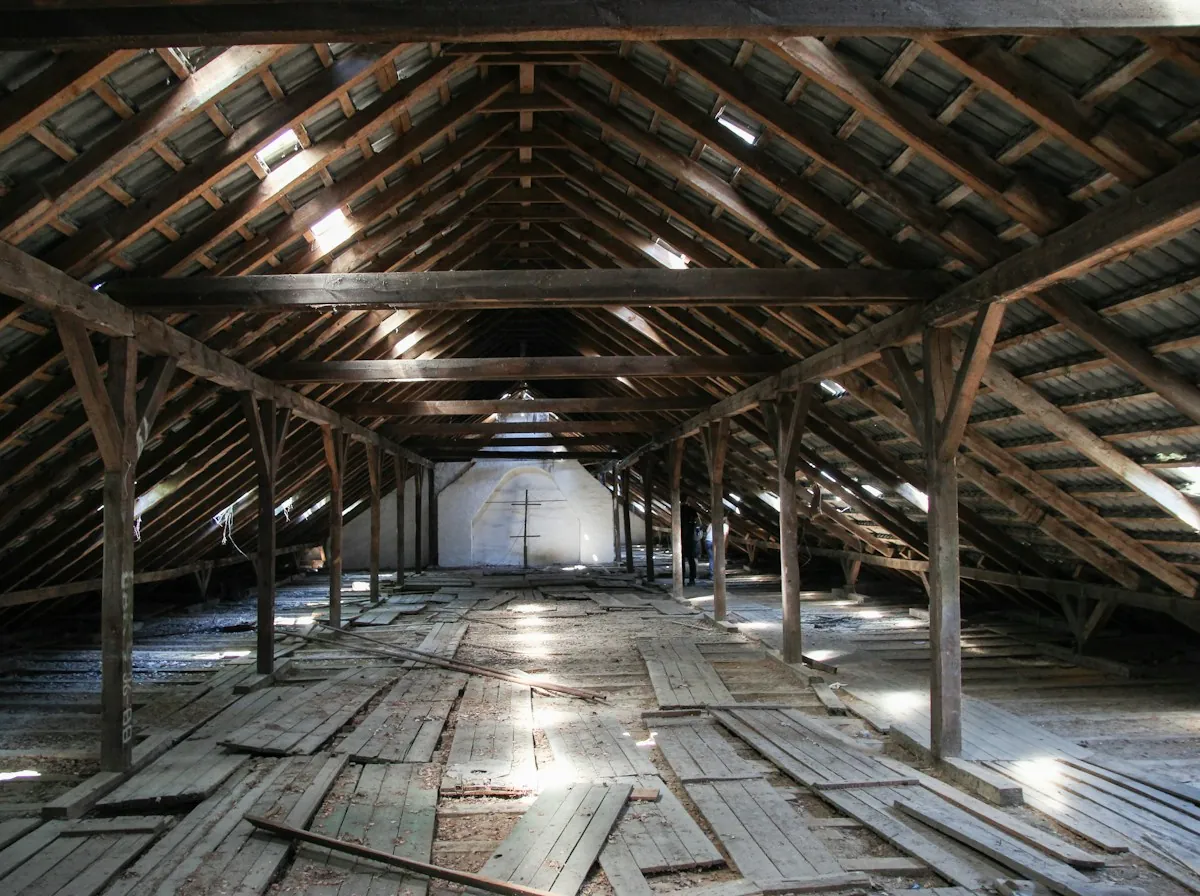
In a cape, half of what an inspection would normally look at is behind a finished ceiling.
One township, one office. The walkaround is the point.
Plain roofs, where sloppy work shows up fastest.
Heavy canopy. Valleys, gutters and shaded slopes.
Mixed use and multi-family. Unit count decides it.
The oldest stock. Board decking and second layers.
The avenue: parapets, drainage, tenants below.
The questions that come up, before you have to ask.
Because water lands on a rafter and runs along the top of it until something stops it. A stain two rooms from the chimney is entirely ordinary, and it is exactly why patching the ceiling side achieves nothing.
Fresh caulk on weathered metal. New step flashing is bright and obvious against an old stack; reused flashing with a bead run round it looks tidy from the ground and is visible for what it is from an upstairs window next door.
An architectural asphalt roof runs $9,500 to $26,000 in New Jersey, and most 2,000 square foot houses land at $12,000 to $18,000 installed. Per square foot that is $5.50 to $8.00 for architectural against $4.50 to $6.50 for three-tab. If a quote is well under those figures, the question is not whether it is a bargain -- it is which of the tear-off, the ice barrier, the starter course, the drip edge or the decking allowance is missing from it.
For a standard asphalt roof on an average house here, yes -- that is well above the $12,000 to $18,000 most 2,000 square foot houses cost. It is not unreasonable for a large or steeply pitched house, a roof with a lot of valleys and dormers, or slate. The number alone does not answer the question; what the quote itemizes does. If it does not break out area, tear-off, decking and the details, no figure can be judged either way.
Labor, usually -- typically more than half the total, and the share rises with pitch and complexity because steep, broken-up roofs take far longer per square foot. But the item that most often moves a final bill away from the quoted figure is different: replacement decking, which nobody can measure until the old covering is off. That is why it belongs in the scope as a rate per sheet rather than a lump sum, and why a quote without one will probably change.
The details named in the scope, so they are checkable afterwards. A walkaround with you before the balance is mentioned.