Chimney Flashing Repair in Avondale from $350. The commonest source of a leak -- and the commonest place to find last contractor's caulk. Free inspection and a written quote.
On attached and multi-family buildings there are often several flues through one roof plane, and a single failed detail can put water into a unit some distance from the stack. Surveying the plane rather than the ceiling is the only way to attribute it correctly.
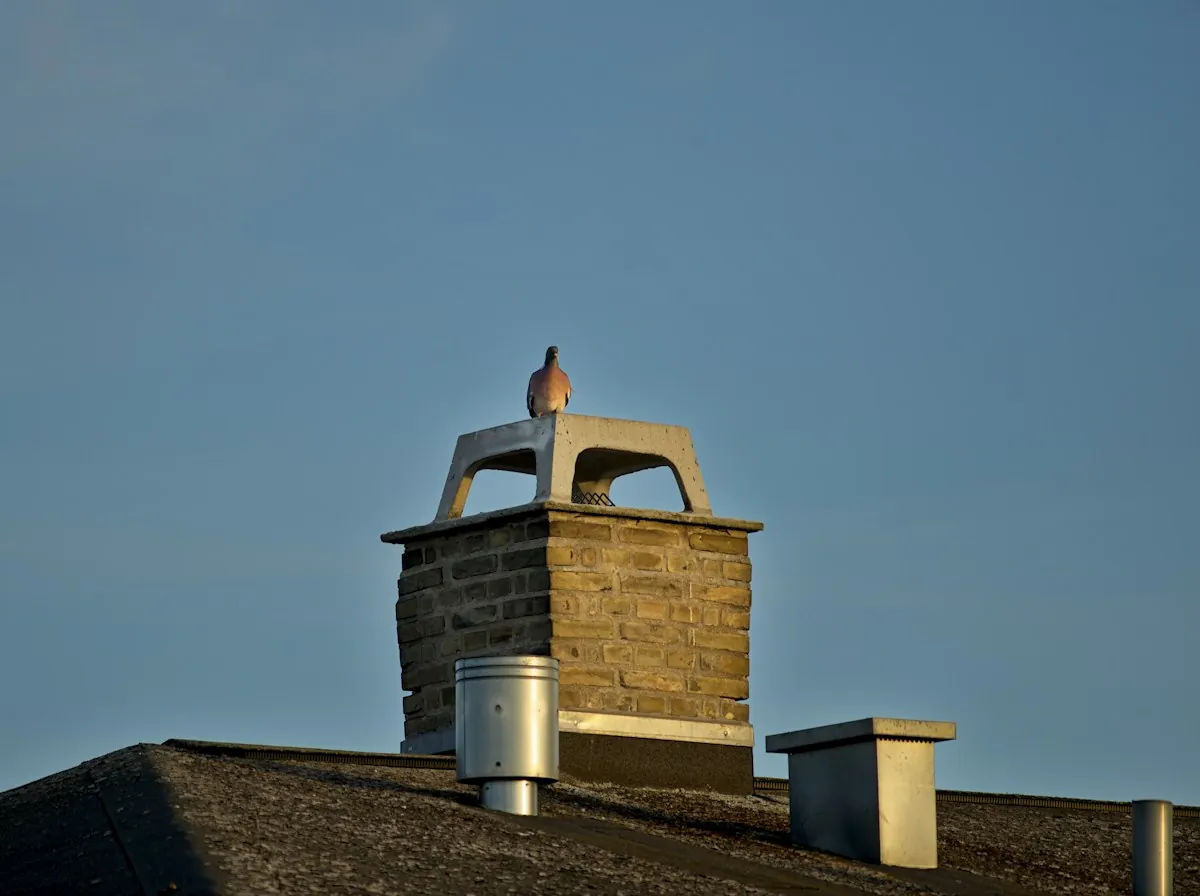
More recurring leaks start at a chimney than at any other single point on a pitched roof. Step flashing up the sides, the apron at the front, the saddle behind and the counter-flashing let into the mortar are four separate details, and any one of them failing puts water into the roof space.


Flashing repairs at a chimney run $350 to $1,600 in most cases, and this is the commonest single source of a recurring leak on a pitched roof. It is also the classic corner cut, because reusing old metal and caulking round it looks fine from the ground for about a year. Unit count comes before covering. One or two units in a detached building is ordinary maintenance; three or more, or an attached building, is not, and that changes the program. Low-slope sections get priced as their own area rather than absorbed.
A single failed detail on sound brickwork -- usually counter-flashing pulling out of a joint, or an apron lifted at one corner.
Mortar. Counter-flashing has to bed into a sound joint, so eroded joints get raked and made good first, and on the oldest stacks in this township there is a great deal more of that than on a post-war one.
Fresh caulk on weathered metal. That means the flashing was reused rather than replaced, and it was almost certainly priced as a replacement.
The one part of Nutley where the unit count is a real question before the covering. Ordinary maintenance covers a detached one- or two-family dwelling; three or more units or an attached building does not, and that changes the paperwork rather than the roof.
Establish how many units the building is before discussing anything else, because the answer decides whether a permit is involved at all.
The last one is the only one on this list that costs the contractor anything to agree to.
Nobody knows how much deck has softened until the covering is off. A rate per sheet is honest; a lump sum is a guess that gets revisited upwards once the roof is open.
Tear-off and disposal is a real cost and a real nuisance. A quote that does not mention it either has not included it or intends to overlay, and overlaying is a decision you should be making rather than discovering.
This is the one that separates people. The work is finished, the balance is not paid, and somebody goes round the outside with you against a list. A contractor who is happy to do that is telling you what they expect you to find.
The one part of Nutley where the unit count comes before the covering.
On a two-family or an attached building a repair has to account for a junction that somebody else owns part of.
On a multi-family building the overnight requirement is that every unit stays dry, which constrains the sequence far more than the work does.
Townhouses and small apartment buildings bring genuine low-slope roofing to this section, sometimes running continuously over several homes.
On a multi-family building the roof space may be divided, shared or inaccessible, so part of the inspection is establishing what can actually be reached.
One township, one office. The walkaround is the point.
Plain roofs, where sloppy work shows up fastest.
Heavy canopy. Valleys, gutters and shaded slopes.
Capes with rooms in the roof. Ventilation first.
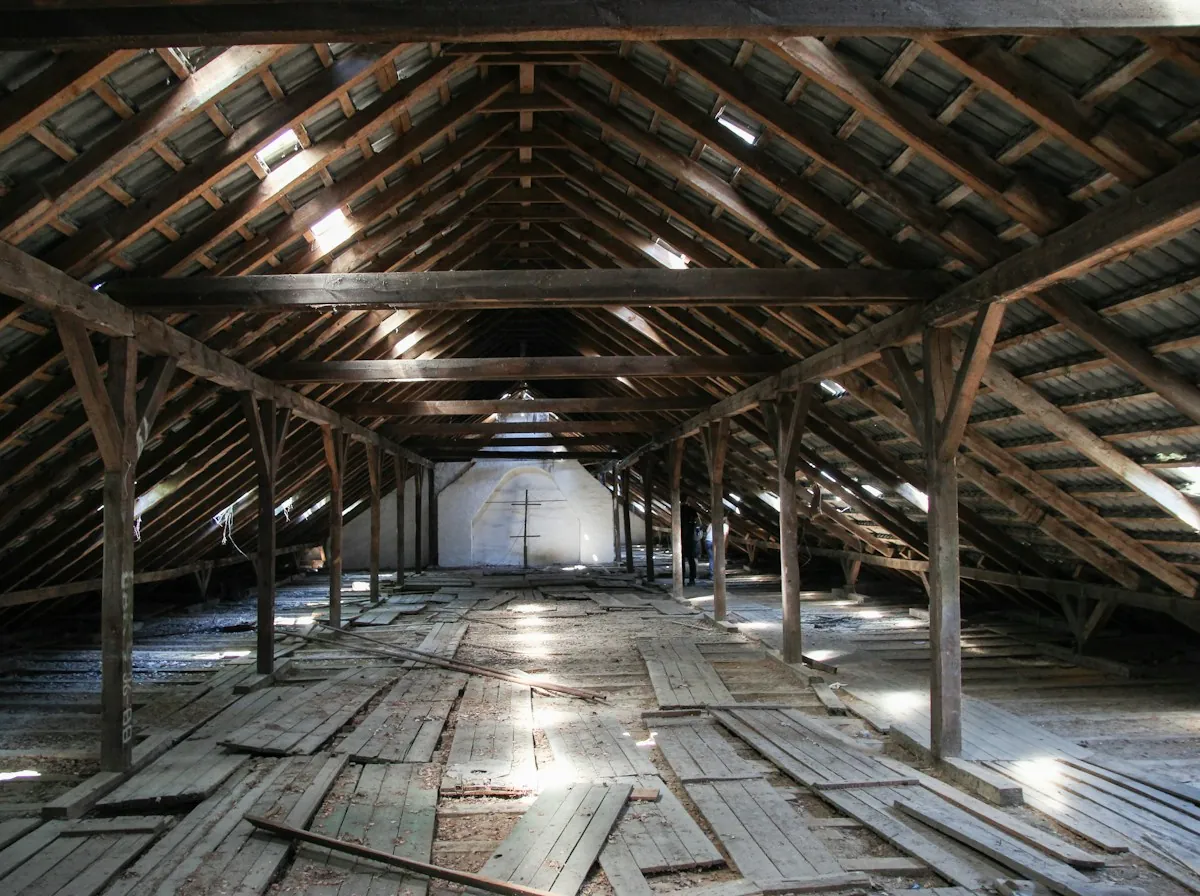
The oldest stock. Board decking and second layers.
The avenue: parapets, drainage, tenants below.
The questions that come up, before you have to ask.
Because water lands on a rafter and runs along the top of it until something stops it. A stain two rooms from the chimney is entirely ordinary, and it is exactly why patching the ceiling side achieves nothing.
Fresh caulk on weathered metal. New step flashing is bright and obvious against an old stack; reused flashing with a bead run round it looks tidy from the ground and is visible for what it is from an upstairs window next door.
For a standard asphalt roof on an average house here, yes -- that is well above the $12,000 to $18,000 most 2,000 square foot houses cost. It is not unreasonable for a large or steeply pitched house, a roof with a lot of valleys and dormers, or slate. The number alone does not answer the question; what the quote itemizes does. If it does not break out area, tear-off, decking and the details, no figure can be judged either way.
Shingles, up front, by a wide margin -- architectural asphalt at $5.50 to $8.00 a square foot against roughly double that for a decent metal system. Metal lasts substantially longer, so on a house you will keep for thirty years the cost per year can favor it. On a house you will sell in five it does not. The honest framing is cost per year of expected life, and on most houses in this township asphalt wins that comparison comfortably.
Usually not, on a house. Replacing the roof COVERING on a detached one- or two-family dwelling is ordinary maintenance under N.J.A.C. 5:23-2.7 -- no permit, no notice, no inspection. Nutley has a good deal of two-family housing, so that covers most of the township. Three or more units, an attached building, or anything structural under the covering is a different answer. Unlike most of this county there is one construction office for the whole of Nutley, so there is only one place to ask.
The details named in the scope, so they are checkable afterwards. A walkaround with you before the balance is mentioned.